How might play reveal neurodiverse plurality and move beyond the normative?

Degree Project

Neuroqueer Play: Uncovering Neurodiverse Plurality Through Playful Practices to Inspire Social Transformation

Lalehan Kahyaoglu

Neuroqueer Play is a practice-based research project that begins with a simple question: what might change if neurodiversity were treated not as something to fix or accommodate, but as a starting point for imagining different ways of living together? The project explores how play can function as a method and art as a space for reflection, opening cracks in dominant ideas of value, time, productivity, and “doing things right.” It operates as an open and flexible framework: a participatory space in which people are invited to show up as they are, experiment together, and imagine alternative social possibilities in uncertain times.

The project brings together experimental workshops, playful artifacts, and artistic documentation to cultivate alternative ways of learning and being—ways in which difference is not tolerated but anticipated, needed, and allowed to remain present without being smoothed out. Neurodivergent, creative, and multisensory perspectives act as guiding forces, shaping both the process and the form of the research. At its core is a sense of playfulness: a curious and sometimes unruly mode of engagement that resists productivity-driven systems and their rigid scripts of efficiency, coherence, and linear time, while also questioning institutional ways of knowing.

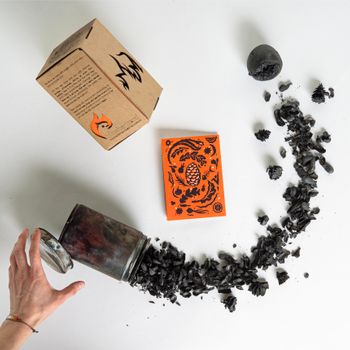
A series of workshops forms the heart of the research and is approached as collective experiments in unlearning and unmasking. Through themes such as embodiment, sensory discovery, queer temporalities, and more-than-human ways of knowing, participants engage in playful and reflective practices. What emerges from these encounters feeds into an outcome: a playful, open-source Neuroqueer Play Practices kit: designed to be used, adapted, and reactivated by neurodivergent creatives, communities, and allies to practice neuroqueering. As a prefigurative practice, Neuroqueer Play approaches transformation as an open-ended process, emphasizing experimentation and collective exploration over predetermined outcomes. It rehearses alternative ways of relating, learning, and being together; ways grounded in care, plurality, and shared curiosity, and in the belief that play can be a serious tool for social change.

What is this about?

Neuroqueer Play treats neurodivergent ways of sensing, thinking, and relating not as problems to fix, but as starting points for knowledge, creativity, and collective world-making. Drawing on neurodiversity movement, neuroqueer theory, crip time, queer temporalities, and feminist phenomenology, the project asks what becomes possible when these alternative rhythms and perceptions are centred rather than merely accommodated. Instead of asking how neurodivergent people can better adapt to existing structures, it turns the question around: what kinds of spaces, relations, and futures might emerge if structures adapt to us?

<p>Unmasking Mask Making is designed as a temporary world for exploring masking and unmasking through hands-on artistic practice. Combining mask-making with reflective prompts and embodied engagement, it invites participants to examine how they conceal parts of themselves, consciously or unconsciously, in response to normative social expectations, and to reconnect with more authentic ways of being.</p>

Unmasking Mask Making is designed as a temporary world for exploring masking and unmasking through hands-on artistic practice. Combining mask-making with reflective prompts and embodied engagement, it invites participants to examine how they conceal parts of themselves, consciously or unconsciously, in response to normative social expectations, and to reconnect with more authentic ways of being.

<p>Fidget Toy Making workshop is a hands-on, sensory-based experience that invites participants to reconnect with their bodies through playful movement and material exploration. Guided by what feels regulating and supportive to their nervous systems, participants create personal fidget companions, tactile objects that carry a sense of comfort and grounding beyond the workshop. The process centers bodily awareness, self-regulation, and neurodiverse ways of sensing and being.</p>

Fidget Toy Making workshop is a hands-on, sensory-based experience that invites participants to reconnect with their bodies through playful movement and material exploration. Guided by what feels regulating and supportive to their nervous systems, participants create personal fidget companions, tactile objects that carry a sense of comfort and grounding beyond the workshop. The process centers bodily awareness, self-regulation, and neurodiverse ways of sensing and being.

<p>I Learned From The Rocks questions institutional and Western-centered definitions of knowledge and intelligence by engaging with more-than-human teachers: rocks. Through embodied practices and storytelling, participants were invited to attune to different perceptions of time and explore neuroqueer and queer temporalities in a playful way.</p>

I Learned From The Rocks questions institutional and Western-centered definitions of knowledge and intelligence by engaging with more-than-human teachers: rocks. Through embodied practices and storytelling, participants were invited to attune to different perceptions of time and explore neuroqueer and queer temporalities in a playful way.

A project made in the course

Master in Eco Social Design Laurea / Abschluss 26.1

Graduation projects from the Master in Eco-Social Design.
More projects by Lalehan Kahyaoglu