

I began exploring aluminium reuse through discarded offset printing plates. These large sheets, around 0.2 mm thick, are regularly replaced in the printing industry and represent an interesting industrial waste stream. Later, I also directed my attention on beverage cans, which share similar properties and are much more widely available.
Unsafe Origami
Luca Damiano Collignan
Student
Luca Damiano Collignan Academic staff
Aart van Bezooijen Course
All Things Aluminium Program
MA Eco-Social Design / MA Critical Creative Practices Semester
2025/26 SS Working with aluminium means working with one of the most recycled materials on Earth. According to International Aluminium Institute, it can be recycled again and again without losing its quality, and almost 75% of all the aluminium ever produced is still in use today. This characteristic has helped aluminium replace plastic in many products over the last decades. As a result, aluminium has become a symbol of circularity, waste reduction, and more sustainable consumption.
However, approaching aluminium from a design perspective also means questioning this perception. While aluminium is highly recyclable, recycling still comes with environmental costs. Collecting, transporting, shredding, cleaning, and melting the material all require energy and resource. Aluminium is therefore a good example of a principle often highlighted in environmental discussions: when possible, reuse has a lower impact than recycling.


In design research, Material Driven Design is a methodology used to explore a material and identify applications that best match its properties. Since I was already familiar with aluminium and its characteristics, I decided to shift the focus from the material to the process itself. I approached the project through what I called Process Driven Design (PDD).
I started exploring aluminium sheets through the folding process. This eventually led me to discover modular origami: structures generated by repeating and combining a single unit into increasingly complex forms.
I focused my attention on developing one folding unit. Moving from paper to aluminium introduced both advantages and challenges. Aluminium is stiffer than paper, making folds more stable and durable. At the same time, it is harder to fold and tends to crack if bent repeatedly.

1/4

2/4

3/4

4/4
To adapt the process to the material, I modified the folding technique and developed a small toolkit to improve precision and consistency. This allowed me to produce units that met the quality standards required for larger assemblies.
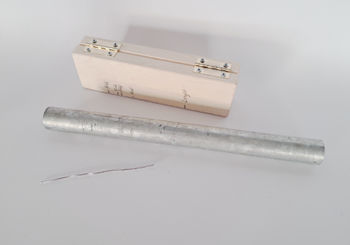
Applying the folding process to beverage cans reveals how accessible and reproducible it can be. Many people consume drinks sold in aluminium cans, and a single large can can provide enough material to create several Unsafe Origami units, each carrying its own unique colours and graphics.
These units can be combined in many different ways. They can be assembled into small formal explorations or used to create larger and more complex structures. The required tools are simple, the material is widely available, and the possibilities are open-ended.

1/5

2/5

3/5

4/5

5/5
A project made in the course
All Things Aluminium
Aluminium. Aluminum. Alluminio. Once more precious than gold, now a fundamental material in industrial and domestic environments.
More projects by Luca Damiano Collignan

Alessandra Capuano, Ana Belen Perez Gonzalez, Luca Toscano, Luca Damiano Collignan
Can we ensure free access to local industrial by-products for the university?

Alessandra Capuano, Ana Belen Perez Gonzalez, Louis Steinhauser, Luca Damiano Collignan
Can a multi-layer participatory design process empower a school community?
Explore related projects

Ana Belen Perez Gonzalez
What can Tetra Pak become when its layers stay together?

Francesco Rocco
What if we rewrite the stars...and sit on them?
Cord Raymond Rahemipour
What if you could give fabric any form you can imagine?

Tobia Socche
Can a single piece of mollica change the way you experience food?

Alina Julia Susanne Ladwig
How can bread become a tool for a shared experience?

Sonja Tessaro
How does breaking something apart bring people Together?