How can urban design interventions support grassroots regreening projects?

Degree Project

Da Grigio A Verde. Campaigning for a greener and healthier city.

Barbara Janina Koniecka

Project "Da Grigio a Verde. Campaigning for a greener and healthier city." explores methods of engaging the local community in shaping a better future for the Piani neighborhood. Combining critical design, street interventions, data visualization, and exhibition design, the project reflects on the current state of urban environments and demonstrates how community-based initiatives can contribute to real change.

Is Bolzano really green?

Despite its green surroundings, Bolzano offers little accessible nature — just 7.24 m² of public green space per resident, well below the provincial minimum of 11.5 m².

Although surrounded by key public facilities, Premstallerhof is currently completely covered with asphalt, misused as a parking lot, and lacking almost all amenities—but it has great potential for renewal.

Premstallerhof was chosen as the location for this pilot project, as the place struggles with many difficulties but also has great potential. The main community facilities, such as the school, kindergarten, and church, are located nearby, bringing many people to the area. Right now, it is an area completely covered with asphalt. It doesn’t serve any function, is misused as a parking lot, and has only two benches with nothing else around.

1/5

Big asphalt area in Premstallerhof, first part of the place project aims to regreen

2/5

The impermeable asphalt does not allow the rain water to soak into the ground

3/5

The second part of the asphalted ground that project aims to regreen

4/5

The area does not serve any specific function, even thought it has a lot of potential it remains unused and empty

5/5

The playground behind the asphalted area, which is included in the regreening project.

Regreening Bolzano

Regreening Bolzano is a project initiated by the association Ambiente e Salute. In 2024, the association began a collaboration with students from the Eco-Social Design program, which led to the creation of the project Da Grigio a Verde.

Through this collaboration, a regreening plan for the area known as Regreening Bolzano was developed and later approved by the municipality. The project was originally created by a group of four students, continued the following semester by three, and is now being carried forward by me as part of my master’s thesis, titled Da Grigio a Verde. Campaigning for a greener and healthier city.

Regreening Bolzano - a grassroot project was initiated by the citizen of Bolzano, who worried about the state of their city. 

What are Regreening Bolzano key goals?

1. Creation of green infrastructure
2. Water & climate adaptation
3. Biodiversity support
4. Recreational and social functions
5. Accessibility & mobility 

The project has city approval and €350,000 in funding, but no start date or final plan. My work focused on promoting it to pressure authorities to act and inform residents about the delays. I explored many different design and research methods in this creative process to engage with the space and promote the project.

1/5

Label for the made-up species “Aspahaltum Giganticum”

2/5

Warming stripes tag - added on the existing mural.

3/5

Warming stripes tag - added on the existing mural.

4/5

Street lightning in Via d'Isarco before my intervention.

5/5

Street lightning in Via d'Isarco after the intervention.

I also experimented with using artistic photography, graphic and poster design to support the initiative’s social media presence.

1/6

New project logo

2/6

Instagram posts

3/6

Poster design

4/6

Poster design

5/6

Grass seen through a kaleidoscope

6/6

Asphalt seen through a kaleidoscope

Project turning point

Surprisingly, sooner than expected, councilor Marco Caruso announced that work on Premstallerhof could begin next year. After four years, progress finally seemed possible, though my partners remained cautious. As the final plan is still uncertain and may differ from the proposal, the project’s focus shifted — I began emphasizing the people behind it and its grassroots origins.

An important part of the campaign was an exhibition in the Premstallerhof building during Bolzano Art Week. Open for four days, it attracted many visitors and helped present the project in a new light, highlighting its development and promoting it among citizens.

1/8

Collage of the place future vision

2/8

Collage and a coloring page of the future vision

3/8

Imagination stimulation frame

4/8

Exhibition entrance 

5/8

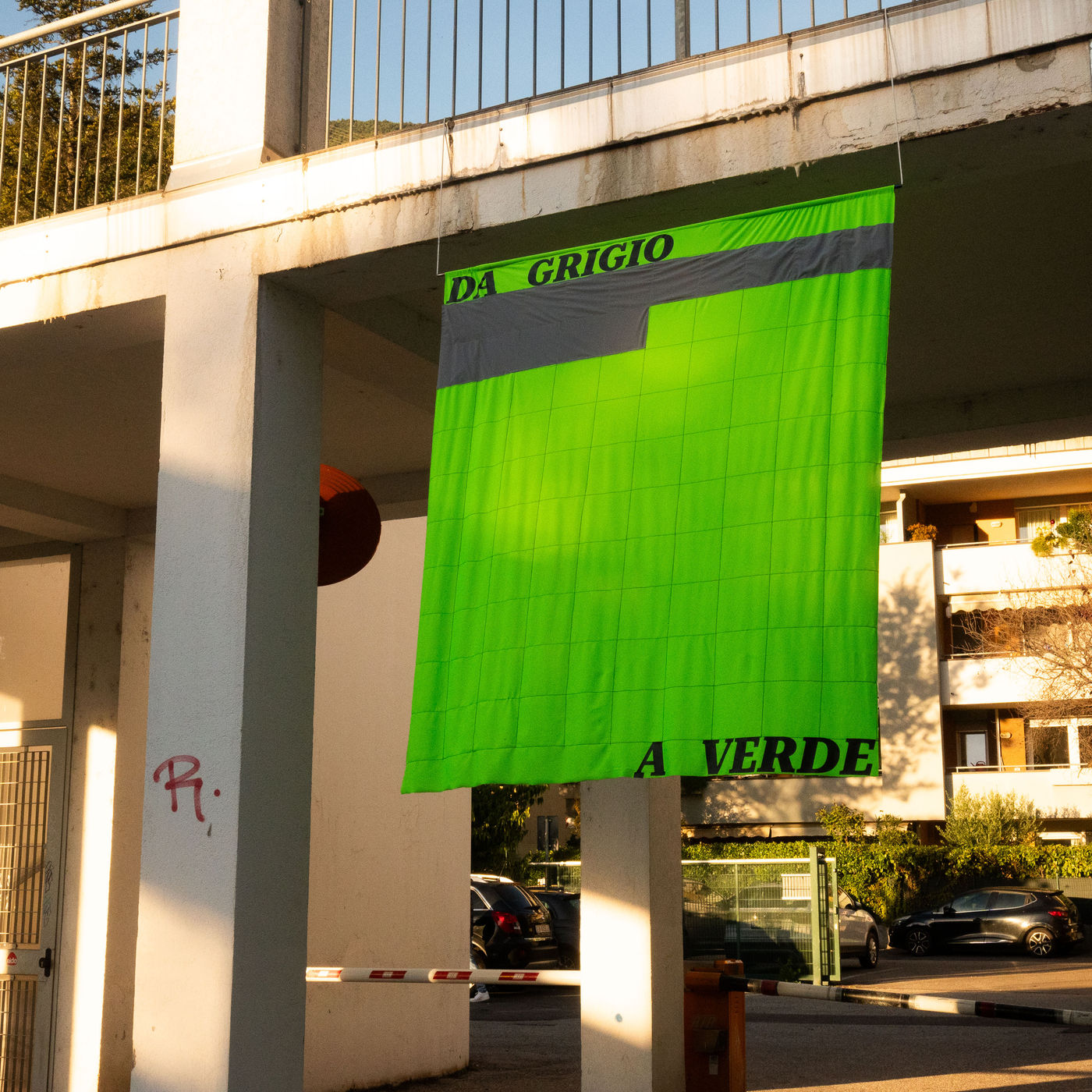
Project logo in a form of a flag. Representing 15% of asphalt and 85% of greenery - one of the project's objectives.

6/8

"Regreening Bolzano" redesigned plan

7/8

Exhibition visitors 

8/8

Data visualization of project history

Press conference

On the second day of the exhibition, we organized a press conference. The exhibition setup served as a perfect backdrop for our message, making the project’s current phase clear and visible. Journalists from TV, newspapers, and radio attended, and both TV33 and TV Alto Adige aired a 2.5-minute segment. The next morning, a full-page article about our project appeared in the Alto Adige newspaper.

The materials were later shared on the stations’ TV and Facebook channels. While it’s difficult to estimate the total reach, combining all viewership and readership data suggests we may have reached up to 147,000 people.

Our message came across clearly - the coverage highlighted the area’s extreme temperatures, the project’s goals, its grassroots, citizen-driven nature, the secured budget, and the planned start date for construction. A personal highlight was giving my first interview in Italian - completely unprepared, yet aired uncut. My strong, fluorescent green visuals worked exactly as intended, featuring in the broadcasts alongside the data visualizations, community participation, project plans, and future vision.

1/5

Journalists filming project flag.

2/5

Article in the Alto Adige newspaper 

3/5

Footage from TV33's evening news program.

4/5

Footage from TV33's evening news program.

5/5

Footage from an interview for Alto Adige TV.

As leaving a mark on the site was important to me, I designed a street art piece based on the data visualization. On the fence in front of the asphalt, I installed 75 wooden flowers, each representing one of the people involved in the process.

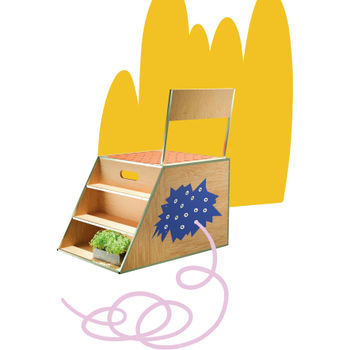
To inspire visitors to keep imagining the future, I also hung a box containing a 3D collage of the project’s vision, a short explanatory text, and information directing viewers to further project details.

1/5

75 wooden flowers representing 75 people involved in the project.

2/5

75 wooden flowers representing 75 people involved in the project.

3/5

75 wooden flowers representing 75 people involved in the project.

4/5

A box with the 3D collage of the space.

5/5

Project posters hanging around the neighbourhood. 

Project's future

If the municipality keeps its promise, work on Premstallerhof will begin in fall 2026, and the facility could reopen in 2027. We plan to continue our involvement in the upcoming processes and intend to influence the final shape of the site's re-greening work.
A project made in the course

Master in Eco Social Design Laurea / Abschluss 25.3

Graduation projects from the Master in Eco-Social Design.
More projects by Barbara Janina Koniecka