Why would you repair?

Repair is not radical

Sharon Dor
Adela Raskova
Irma Ruiz Velasco Monroy
Vanessa Wahls

This project is a collaboration between students of the Eco-Social Design Master’s program at the Free University of Bolzano and SPORTLER, a local–regional sports retailer. The aim of the project is to promote more responsible consumption habits and raise awareness among SPORTLER’s customers and store visitors about the company’s repair service and the broader environmental impact of the fashion and outdoor gear industries. Through an online survey we explored people’s motivations, behaviors, and emotional attachments related to the consumption of outdoor clothing and equipment which was the foundation of understanding what drives purchasing decisions and what barriers exist to repairing rather than replacing items.

The project seeks to design interventions within SPORTLER’s retail spaces that communicate the value of repair and durability in a compelling and accessible way. By increasing the visibility of the brand’s repair services and promoting a culture of care and longevity, the project hopes to influence customers at the point of purchase, encouraging more reflective and environmentally conscious decisions. 

1/6

Repair is not radical

2/6

Looking behind the repairs and circularity

3/6

Explaining the service and emotional side of repairs

4/6

Checking out how to care for your clothing

5/6

Testing the knowledge about the textile industry

6/6

How to repair - A step by step guide

Our partner - SPORTLER engages in circular practices

SPORTLER is a family-owned sports retail company based in Bolzano, Italy, with over 40 stores across the Alpine region, including Italy, Austria, and Germany. Founded in 1977, SPORTLER specializes in high-quality clothing, equipment, and footwear for outdoor sports such as skiing, hiking, running, cycling, and climbing. SPORTLER aims to combine performance with responsibility, supporting active lifestyles while encouraging more mindful consumption practices within the sports and outdoor community. 

Although no formal management policies are in place yet, SPORTLER is in the process of developing clear guidelines for returns, resale, and circular services. Key initiatives include the Repair Service in South Tyrol, offering professional maintenance for technical outdoor gear, and the Circularity Area in the Milan-Carugate store, where customers can access repair, resale, and take-back programs. Additional efforts include recycling packaging materials and bike components and replacing disposable workshop tools with reusable alternatives. 

1/3
2/3
3/3

Our goal – From idea to visibility

The goal of this project was to evaluate SPORTLER’s textile repair service for outdoor gear, which is currently being introduced across its stores. We aimed to develop ideas for improving how the service is communicated, identifying its limitations, and suggesting ways to make it more visible and widely used. Our goal was to understand how the service could be transformed into a well-known and widely used offering. We focused particularly on the clarity and accessibility of communication, ensuring that the service is easy to find, understand, and use. 

Beyond improving communication, the project also aimed to support SPORTLER’s broader vision of promoting more sustainable consumption patterns. By making repair services more visible and approachable, the project contributes to normalizing repair as a valuable and appealing alternative to replacement. Our intention was not only to help increase the uptake of the service but also to shift consumer perception – framing repair as an act of care, responsibility, and identity rather than as an inconvenient necessity. 

1/4

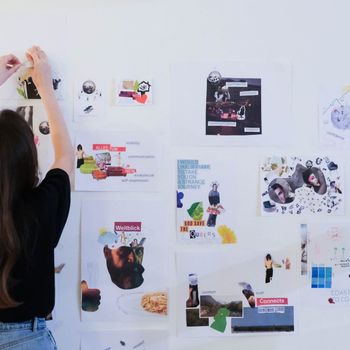
Exploring the topic in Design Research through mapping

2/4

Focusing on research topics

3/4

Survey Poster Design

4/4

Connecting our survey to SPORTLER´s Instagram Channel

Why would or wouldn't you repair?

Prior to designing the Instore Installation and Communication, we published a survey eager to pin down the motivations why people repair, don´t repair and what limitations they think they might face. The results underlined our initial Hypotheses: (1) garments with emotional value are more likely to be repaired, (2) people are more willing to repair when the cost is significantly lower than buying new,  garments with emotional value are more likely to be repaired and (3) although many people are interested in repairing, they are often unaware of the available options. Additionally the secondary research – literature and similar surveys – backed our data: Jonathan Chapmans “Emotionally durable design”, as well as Orsola de Castro´s “Loved clothes last” (the titles might give a hint) underline the importance of a user/object relationship” (Chapman, 2005) and the lack thereof in modern capitalist society.  

People to care about in order to care for their garments. Giving space to think about and to rebuild this relationship is therefore one of the main goals of our project. Additionally, we focussed on bringing attention to SPORTLER´s existing repair service, giving interested people an accessible way to get active. 

1/6
2/6
3/6
4/6
5/6
6/6

Repair is something to be proud of. Embrace it! 

Building on the key findings of our research, we developed the main message.

Repairing clothes or the signs of repair used to be a “badge of shame”, among other things because of the association with repair and poverty, the missing financial means to buy new (de Castro, 2021). With a long human history of preserving and repairing things that we hold dear, for example in the traditional Japanese method of beautifully repairing broken pottery called “kintsukuroi” or “Kintsugi”, and growing textile production waste problems emerging, we have more than one reason to repair. 

Seeing the garment you wear as a valuable companion instead of just a “jacket”, especially in the context of outdoor clothing, enables to view the damage and the following repair as more than just a scratch, but a proud reminder of adventures lived together – the same as watching the little scar on your knee, thinking of the sunny days you went out with your friends to bike. 

We integrated this message in the design of the visual identity of the project as well as the design and contents of the instore installation, which will be explained in detail in the following chapters.

A garment mended multiple times reads like a photo album, with the moments and memories that we stitch upon our clothes. We have forgotten how to mend because it hasn´t felt important. It is.”  (de Castro, 2021, p.22) 

1/3
2/3
3/3

Visual Identity - Adventures, Repair and beautiful "Unperfectness"

The main conceptual axis was the emotional attachment to garments and the willingness to extend their lifespan no matter the visible interventions. In this context, seams, patches, and other signs of repair were not treated as flaws, but rather as expressive elements that narrate the garment's use, history, and the wearer’s connection to it.  

The primary visual element was a hand-drawn typeface with irregular strokes and a hatched appearance. Each letter with unique formal variations that reference the aesthetic of imperfection, evoking the logic of stitching, mending, and the traces left by time and experience.  

The secondary typeface – Brown, already part of SPORTLER existing brand guidelines – was also included. It's simple and lightweight design does not compete with the expressive hand-drawn typography and provides a functional and neutral complement to the overall visual system. 

Regarding the colour palette, the institutional tones of the SPORTLER brand were preserved to maintain visual coherence and corporate identity. The light green tone currently used in the signage for sustainable products – both online and in physical stores – was also retained, and neutral tones were incorporated to bring balance and sobriety to the overall design. 

1/7
2/7
3/7
4/7
5/7
6/7
7/7

Installation and In-Store Communication

The installation we presented at the GOG exhibition is part of a larger installation designed for display at Sportler's Alpine store. Given the space, we explored various intervention possibilities and how we could enhance the presence and message of the new repair service. After surveying the location, we chose to intervene in the pop-up area at the store entrance, which has high visibility, as well as in the fitting rooms, on the store floor — and through various signage elements throughout the store, such as informational hangers and totem stands — all with the aim of reaching customers at different points during their shopping experience. Our goal was to provoke thought and influence their decision-making process regarding the purchase of new items.

1/3

Through stickers on the outer sides of the vitrines and windows, we are able to catch passing by shoppers. More pictures will follow after implementing them in real life end of this month!

2/3

Those hangers will be on the clothing racks to disrupt the shopping process and raise questions in the action.

3/3

Catching the customer's attention in the fitting room for a moment of reflection

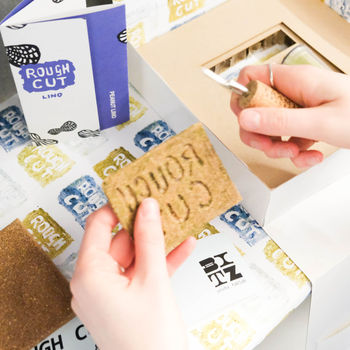
Since most respondents expressed concern for the environment, we aimed to reflect this in our in-store presence. The installation was created using recycled and recyclable materials, such as existing metal frames typically used by SPORTLER, cardboard, retired climbing ropes, and garments returned by customers. This choice of materials aligns with the brand’s sustainability goals, emphasizing the reuse of resources and waste reduction. A secondary goal was to raise awareness about the environmental impact of textile waste and the value of repair, especially for technical garments.

1/4

The materials for the planned installation 

2/4

Discarded climbing ropes

3/4

Testing the layout in real life

4/4

Digital prototyping

We chose to provide practical tips alongside statistics because, while data is important for understanding the scale of the environmental crisis, it can often feel overwhelming and disempowering on its own. By pairing statistics with simple, actionable steps, we aim to transform concern into motivation and empower individuals to take meaningful action. Practical guidance bridges the gap between awareness and impact, helping people feel that their choices matter and that change is not only necessary – but also possible. (Chapman, 2005, p.33) 

1/6
2/6
3/6
4/6
5/6
6/6

In addition to providing information about environmental impact, our research clearly highlighted the emotional connection we have with our clothes and belongings, and the importance of this connection in extending a product’s lifespan through proper care and repair instead of discarding it. To encourage customers to reflect on their emotional bond with clothing, we chose to present garments as an integral part of the experiences we accumulate while wearing them.

1/4
2/4
3/4
4/4

Another important aspect we felt necessary to highlight was the human element behind the repair service. Our goal was to help customers understand that each repair is carried out with care and thoughtfulness by a person who deserves fair working conditions — and that, accordingly, the repair process holds monetary value. We chose to communicate this through a video filmed at Einstein’s studio, which explains the process from beginning to end.

1/3

Checking out SPORTLERS Partner einStein

2/3

Getting a look behind the repairs

3/3

Behind the scenes: Filming the repair

To be continued...

Our project moves to the SPORTLER Alpin Store on 23rd of June and we´d be happy to see you there! And maybe you will see us in other SPORTLER stores as well in the future.

But for now take care of your clothes, take them on adventures and visit the Installation in the SPORTLER Store, when you go and repair your items :)

Installation photos by Pablo León / www.pabloleon.org


Sources

Chapman, J. (2005). Emotionally durable design: Objects, experiences and empathy. Earthscan. 

de Castro, O. (2021). Loved clothes last: How the joy of rewearing and repairing your clothes can be a revolutionary act. Penguin Life. 


A project made in the course

Project 2 - HOPE – 11 projects reclaiming the future now

In times with no reason for optimism, 11 projects »start [...] not from fear and enclosure, but from hope and overflowing.« (John Holloway). They are engaging for humble changes within a ~ hopefully ~ bigger emancipatory transformation, together with partners in the “real world”.  The projects range from circular material flows to repair, from reclaiming inclusive common spaces in the city to redesigning a school yard with the kids, from unheard stories of mountain ecosystems to sustainable tourism, from collective approaches to climate crisis to digital protest.
More projects by Adela Raskova, Irma Ruiz Velasco Monroy, Sharon Dor, Vanessa Wahls
Explore related projects