

RE:imagine
Helene Maria Oceana Kunze Malin Paucke Alice Jade Yorke
Student
Helene Maria Oceana Kunze Malin Paucke Alice Jade Yorke Academic staff
Secil Ugur Yavuz Sonia Cabral Matos Kris Krois Course
Project 2 - HOPE – 11 projects reclaiming the future now Program
MA Eco-Social Design Semester
2024/25 SS Play is a fundamental right of every child. Yet many public schools lack the funding or support to provide enriching play environments—despite their essential role in children's social, physical, and emotional development. In response, we partnered with two classes (3rd and 4th grade) at Albert Schweitzer Primary School in Merano to transform their bare, concrete schoolyard. Throughout eight creative workshops, the children took the role as experts of play. We used mapping, drawing, and prototyping to explore their needs and desires. Together, we upcycled tires into seats and game tables, repurposed bamboo and a paraglider into modular hideaway structures, and designed a painted open-play parkour course. The project seeks to shift decision-making power toward children while developing a practical toolkit that can serve as a blueprint for other schools facing similar financial challenges.


1/3

2/3

3/3
The current schoolyard at Albert Schweitzer Primary School is unsuitable for the play needs of the children aged 6 to 11. It consists mostly of concrete, with minimal greenery and no sun, wind, or rain protection. The hard surface frequently leads to grazes and scratches during play. Which also leads to the toys rapidly wearing off or breaking. There are two outdoor areas: a smaller yard (used by 40 students) that is partially sheltered by the school building, and a larger yard (used by 120 students), which was originally designed as a car park. Children rotate between these spaces, spending two hours outdoors each day. The lack of stimulating, safe, and weather-resilient play environments has led to boredom and frustration among students, negatively affecting their well-being and learning. This presents ongoing challenges for teachers in managing classroom engagement and behaviour.
Our project aimed to address those issues and start the schoolyard's transformation process. For two months, we conducted a series of eight workshops. Those took place regularly - every week - except during school holidays. The workshops were held with a class of fourth graders, and each week, different students from the third grade also participated. Overall 30 children were actively involved in the design process. The workshops were structured into the following phases: exploring, collective vision, building, and implementing.

1/1
Design Process

Phase 1: Exploring

1/15

2/15

3/15

4/15

5/15

6/15

7/15

8/15

9/15

10/15

11/15

12/15

13/15

14/15

15/15
The exploration phase aimed to develop a well-rounded understanding of the current situation from multiple perspectives. We began with an interview with the Middle School headmaster and the social worker, which offered valuable insights and context to the school. We then connected with the teachers of Albert Schweitzer and got their perspectives on the challenges they face and observe. They also gave us access to the parent's open letter to the municipality which provided insights on their concerns with the schoolyard. From the start, the students provided the expert's perspective on play. During our first workshop, we used mapping as a tool to evaluate how the schoolyard is currently used. The results show that the students play tag in the open space in the middle and prefer to eat in the corners of the yard.
After gaining a general understanding of how the playground is currently used, we began envisioning its future together with the students. We started with an individual brainstorm, guided by a set of questions in the Spielbuch for the children to fill out. Big, imaginative ideas such as turning the space into “Gardaland" emerged. In the second workshop, we focussed on each student’s strengths and interests. This helped us explore what could realistically be achieved together, without losing the spirit of their original visions. The third workshop broadened our perspective. We brainstormed as a group, clustering ideas around three key themes: movement, recharge, and imaginative play, which had emerged through their answers in the Spielbuch. Each student then selected one idea from the discussions and began imagining what it might look like in real life. In the fourth workshop, we brought those ideas to life by translating them into tangible models.
Phase 2: Collective Vision

1/14

2/14

3/14

4/14

5/14

6/14

7/14

8/14

9/14

10/14

11/14

12/14

13/14

14/14
The second phase aimed to contextualize students’ ideas from Phase 1 and shape a common, low-budget, and realistic vision. Starting at the end of Workshop 4, we transitioned from blue-sky thinking to more practical concepts. Students received visual inspiration sheets based on the available materials—tires, fabric, and paint—and used post-its to suggest ideas aligned with both the material constraints and activity categories.
After the session, we compiled their input into a spreadsheet and identified recurring themes. "Movement" and "Recharge" emerged as top priorities, with a parkour course and a hideaway place mentioned most often.
Workshop 5 began with a recap of the project journey, highlighting how the students’ input had shaped the direction. We explained the focus going forward: creating a parkour space and a place to relax and hide away.
One of the biggest challenges during the project was the lack of funding, which meant we had to rely on material donations. We are very thankful for our generous donors: Elena Kostner gifted us a parachute from which we recycled both the fabric and the cords. The bamboo is from Simon Wallis who used it for a previous uni project. The tires came from a local mechanic and we were able to use paint from the school.
The session concluded with a visit to the schoolyard. Students used a design checklist to evaluate whether their ideas would fit the space and marked their concepts on the ground with chalk. These markings later became key reference points for painting the ground after Workshop 8.
The Design

1/4

2/4

3/4

4/4
After formulating a collective vision together with the students, we returned to the university to develop a design that incorporates their ideas.
The final design consists of three elements: triangles, tires, and floor painting.
The triangles are made from prepared bamboo sticks that are connected together with plastic corners that have been heat-bended out of PVC pipe. The triangles can be connected with velcro to build modular shapes. Fabric triangles, sewn from the recycled parachute, can be inserted into the frames to a sheltered hideaway.
The tires have two sides: the woven side is for sitting and the other side can be used as a table. We let the students design the table tops and they painted different games like tic-tac-toe, "Mensch ärger dich nicht" or a maze on it. The underside of the table top is coated with chalkboard paint, allowing students to draw and write freely.
The design of the floor painting is inspired by the game snakes and ladders which we adapted and made more abstract. The different shapes and colours invite the students to come up with different forms of play: such as a parkour course, the floor is lava, hopscotch or different variations of tag.
What was especially important for us in the design process was that all elements could be used in multiple ways and support open-ended play. We wanted to create a flexible environment that encourages creativity, exploration, and self-directed interaction. This openness allows students to reinterpret the elements according to their own ideas, moods, or social dynamics. All of the three main elements can be used separately or can be combined to build cozy hideaways or exciting parkours.
Phase 3: Building

1/10

2/10

3/10

4/10

5/10

6/10

7/10

8/10

9/10

10/10
Workshop 6 and 7 were focused on collective building. We started by introducing the tires seats to make together. This involved the students washing the tires, drilling some holes, then cutting and weaving the rope to create the mesh to sit on. They also started to sketch out some ideas of what they would like to paint on the table tops for the tires. In the seventh workshop we collectively voted which ideas to put on the four table tops. The students decided for tic-tac-toe, a maze, the german board game "Mensch Ärger dich nicht" and a worldmap, which they then painted on the table tops.
Phase 4: Implementing

1/12

2/12

3/12

4/12

5/12

6/12

7/12

8/12

9/12

10/12

11/12

12/12
In the eighth workshop we introduced the triangles. Because the bamboo framework required tools and techniques not suitable for building with the children, we instead gave them the opportunity to decorate the triangle fabrics. We set up a potato-stamp station were the children could carve their own stamps and print them on the sewn triangles. This final workshop also emphasised explorative play—an open-ended approach that encourages children to experiment freely, come up with their own ideas, and test different ways of using the materials. The children imagined and built new structures with the triangles and explored various forms of play based on their own creativity.
After the collective building and us adding the floor painting we had a first moment where all the elements - triangle, tires and floor painting - came together. This moment marked the transition from construction to active use, and it provided the students with the opportunity to explore and interact with the full design. During the official inauguration the project outcome was then introduced to the whole school.
Coming back to the class we used this moment to collectively look back at the project. In a shared feedback round we collected the student opinions about the project and its process. As a thank you to students who participated in the project we handed out personalised certificates. This closing moment served not only as a conclusion to the project, but also as a celebration of the children's role as active designers of their own environment.

1/7

2/7

3/7

4/7

5/7

6/7

7/7
Critical Reflection
With the addition of tire seats, bamboo triangles, and colorful ground paintings, the schoolyard now offers a more diverse and imaginative space for play. These elements create opportunities for both active movement and calm resting, supporting a wide range of needs—from recharging to adventure. During the inauguration, the new features were effortlessly integrated into the children's play, without the need for further explanation or instruction.
Throughout the project, the children actively shaped the process with their ideas and enthusiasm. For many, this was their first experience with the participatory process. They were not accustomed to being asked for input or to make decisions about their environment. At times, they leaned towards clear guidance rather than open-ended tasks, highlighting the need to gradually build a culture of participation within schools—one that empowers students to take on creative agency and co-design their spaces.
Looking ahead, the product designs - especially the plastic connectors of the triangles - could be refined using more sustainable materials. There's also potential to explore how the objects might be adapted for teaching. For example, the triangles could support math lessons (e.g., understanding fractions), and the tires and paint might serve as part of a physical education course by creating an obstacle parkour.
At the heart of this project lies a fundamental question: how can we raise the visibility and perceived value of play in education? Despite its vital role in children’s physical, social, and emotional development, play is often underfunded and undervalued in school planning. This project shows that playful learning environments can be co-created—even with limited budgets. However, broader structural support and dedicated funding are essential to make such initiatives more widespread and sustainable.
A project made in the course
Project 2 - HOPE – 11 projects reclaiming the future now
In times with no reason for optimism, 11 projects »start [...] not from fear and enclosure, but from hope and overflowing.« (John Holloway). They are engaging for humble changes within a ~ hopefully ~ bigger emancipatory transformation, together with partners in the “real world”. The projects range from circular material flows to repair, from reclaiming inclusive common spaces in the city to redesigning a school yard with the kids, from unheard stories of mountain ecosystems to sustainable tourism, from collective approaches to climate crisis to digital protest.
More projects by Alice Jade Yorke, Helene Maria Oceana Kunze, Malin Paucke
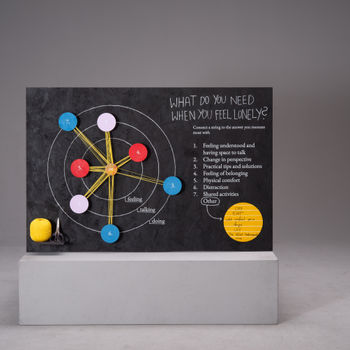
Alice Jade Yorke, Helene Maria Oceana Kunze, Malin Paucke, Pia Doreen Rehwald
What do you need when you feel lonely?
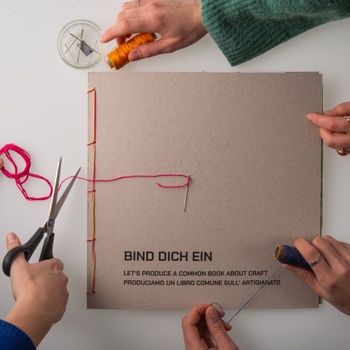
Helene Maria Oceana Kunze, Jelke Maria Harmine Meyer, Linda Enrich, Malin Paucke
How can we use crafting as a tool to foster social connections?
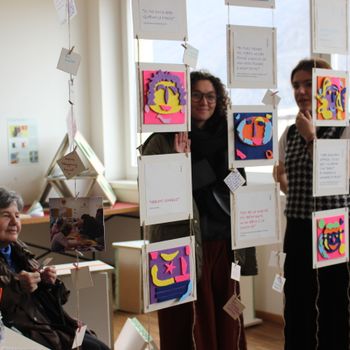
Adela Raskova, Alice Jade Yorke, Anna Graziani
Can we create connections that overcome age and language barriers?
Explore related projects

Alessandra Capuano, Ana Belen Perez Gonzalez, Louis Steinhauser, Luca Damiano Collignan
Can a multi-layer participatory design process empower a school community?

David Vincent Schwarzfeld, Johanna Cepeda Hess, Luca Toscano, Sophie Louise Meyer, Wentao Lu
How could water reshape the way we gather, cool down, and co-create a city?

Anael Arthur, Aparna Gomathi Nataraja Pandian, Carlota Coutinho Coelho Da Silva Portela, Dide Su Unluakin
What if the key to escaping the room was to learn to ask for help?

Anna Pitton, Beatrice Guerra, Elena Galvani, Tommaso Sottopietra
How can a park guide people with dementia toward autonomy and inclusion?

Anael Arthur, Flavia Padulano, Julia Gomez De Frutos, Wentao Lu
How can we understand the complex layers of biodiversity?

Alessandra Capuano, Ana Belen Perez Gonzalez, Luca Toscano, Luca Damiano Collignan
Can we ensure free access to local industrial by-products for the university?