How to find support as a migrant in Bolzano?

Support Lines

Emma Laura Baylon Ibarra
Anna Ruth Kaufmann

For asylum seekers, refugees, and migrants in difficult situations, the journey to ensuring a livelihood is complex and straining. From learning the language to accessing services needed for a dignified life, they often have to move around the city to find the right information. 

Many times, the information given to migrants is hard to understand due to language barriers and bureaucratic complications, even worse some information is sometimes simply outdated. This happens because services to migrants change every year, making regular updates a challenge.   

Support Lines is a website that helps to find support. It includes maps showing places and services, along with key information. Through simple visual language and translation options, it makes the information accessible and easier to understand.

Context and Aims

Support lines were made in collaboration with the voluntary group Bozen Solidale, as a project that helps migrant people in Bolzano who are living in difficult life situations to access information that can lead them to services that might be helpful. The term “migrant” is often used broadly and in various contexts, but in our research and project, we focused specifically on migrant people with urgent needs — particularly those at risk of becoming homeless — in the city of Bolzano.

Through our collaboration with Bozen Solidale, we learned that accessing the right information in order to receive help is a major challenge for this group. Although there are several organizations in Bolzano that provide valuable support to migrants, refugees, and people in urgent need — offering shelter, food, and assistance with bureaucratic processes — each service has its own access procedures. Unfortunately, the fact that each service has its own access procedures makes the system confusing and adds another layer of complexity for those already in vulnerable situations.

The aim of this project is to make information for migrants more easy, understandable and accessible to find services they really need. 


1/1

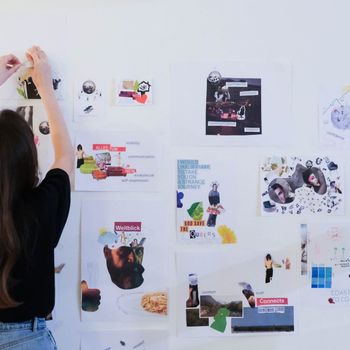
As a first step of the project, a Future Wheel was developed to imagine possible scenarios where this problem of communication can be solved. We created different possible outcomes and took them to the future to see how they could be developed and used, so we could decide which alternative would be the most efficient and adequate for Bolzano. The best at that moment was the creation of a website where information can be updated regularly and translations can be done easily.

To reach this possible future, we chose different methods that led us to a multifaceted project — from the gathering of information and its organization to the testing of the final project and its improvement.

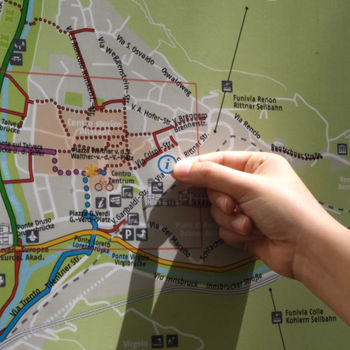
At the beginning of our research, the only thing we had was a printed map from the municipality dated 2021, which we used to understand the current situation. However, we found out that some of the places on the map no longer existed, so we realized we might need to visit them and create our own mapping of services in Bolzano. To do this, we created an ethnographic diary with notes and sketches of all the places we visited.

1/5
2/5
3/5
4/5
5/5

During the mapping, we encountered a large amount of information that plays an important role in accessing services. In some places, only certain people can enter — for example, depending on whether you are a woman or a man, whether you have a residence permit, or whether you have children. All of these elements are important to determine if you are in the correct place. Because of this, we decided to design a form in the shape of a postcard to organize the information and later classify it in the most effective way.

1/8
2/8
3/8
4/8
5/8
6/8
7/8
8/8

Additionally, we conducted several interviews with people working in the organizations to find out their schedules, target groups, and the services they offer. In some of the interviews, they also gave us recommendations on how to access other services or other places that could be added to our map. Especially during the interview with our partner Bozen Solidale, they helped us filter the information based on the categories that we had previously gathered with the postcards. As a result, we created two maps: one for services open to everyone and one only for people with documents.

1/3
2/3
3/3

With all the information classified and placed on the maps, we focused on the visual communication design. Visual communication is an important part of our project, as our target group are migrants and Italian is not their native language. We had to use visual tools to communicate the information in a simple way that everybody could understand. Given this, we conducted a pilot study with five international university students who do not speak Italian or German, using a questionnaire based on the normative ISO 9186-1 to test the icons used in Bolzano and find out if they were understandable for them.

The results of this pilot study gave us important guidelines for designing the illustrations shown on the website, such as using only colors and ambiguous features to avoid depicting a specific type of migrant. These images guide the user step by step through the path to accessing services, using visuals to explain the context and the actions necessary to reach the right places.

1/5
2/5
3/5
4/5
5/5

To understand if the website would be accessible and understandable for our target group, we did usability testing at Schutzhütte, a shelter and consultancy offered by a church. We were allowed to conduct the testing with women attending an Italian language course. For the usability testing, we adjusted the Pictorial System Usability Scale (P-SUS) (Baumgartner, Sonderegger, and Sauer, 2023) to make it easy to understand even without reading words. This usability testing was very insightful. We received feedback to improve the website, such as adding a translation button on the page and tutorial videos at the beginning of the website for people who cannot read or are not familiar with technology, as well as before the maps to explain how to use the filter tool in Google Maps for a better experience.

Critical Reflection

During the project, we came to understand that the situation in Bolzano regarding services for migrants with urgent needs is highly complex—comparable to an iceberg, with many hidden layers and bureaucratic processes. Moving forward, it may be crucial to better connect existing services so that they function more cohesively as a network, particularly in terms of information sharing. Clear and unified communication could help reduce confusion caused by different actors providing conflicting information.


A recent legislative proposal in Italy may require individuals to present a permesso di soggiorno in order to get a SIM card (infomigrants.net/en/post/59985/italys-new-security-decree-could-make-life-harder-for-migrants-if-passed, accessed 12.06.25). If this becomes law, it could further limit migrants’ access to mobile internet and with that also to our website. As a result, alternative, offline ways of distributing information need to be considered. 


In response, we developed the “Join Us” website extension during the Social Interaction course. This section invites individuals with spare public space to download and display our poster, particularly targeting small businesses such as cafés or shops. Additionally, we explored the idea of enabling volunteers to act as digital infopoints—places where people with urgent needs can go to access relevant information. This concept remains a prototype for now, as it requires further development, especially with regard to safety and privacy for volunteers who wish to become part of support Lines.

1/2
2/2

Looking at the broader accessibility of the website, we aim to continue developing a version that can also be used by individuals who cannot read. So far, we have created two explanatory videos in Italian, based on insights from usability testing with our target group. We are also considering using the Support Lines YouTube channel to publish additional instructional videos. These could explain, for example, how to access specific services such as the questura to obtain a permesso di soggiorno or how to seek support in other areas.

Since our partner, Bozen Solidale, is a volunteer-based group, we had no budget and relied on the free version of WordPress to build the website. This brought certain limitations, especially regarding usability and customization. We hope to find more supporters in the future who can contribute financially to help maintain and further develop the site. Additional usability testing with our target group will also be important to make the website more user-friendly, especially considering the different levels of literacy and accessibility needs.

For Project 2, we focused on migrants with urgent needs. In the future, however, we can imagine expanding the website to include additional content for other vulnerable groups, such as women in precarious situations, LGBTQIA+ individuals, and homeless people. Some of the services already featured also address the needs of these groups, since there is often overlap, but we aim to deepen and clarify these layers to serve them more precisely.

Considering the illustrations we focused more on not depicting a certain type of migrant to avoid reinforcing stereotypes, but in the future we want to also work more on the ambiguous gender and further adjustments when it comes to the origin of someone. 

Maintainance

Throughout the project, one recurring question was how we plan to maintain the website so that it remains up to date and useful. We are actively seeking future collaborations with various actors in this sector and have already presented the website to key stakeholders to discuss possible partnerships. Our hope is that multiple supporters will come on board to help sustain the project over time.

We envision Support Lines as a platform that can strengthen the connections between different services and build a more resilient support network—not only for migrants with urgent needs but also for other vulnerable groups. Our goal is to ensure that everyone in a precarious situation can find the information and support they need.


Support Lines Website

Support Lines YouTube Channel

References

References:


Azienda Servizi Sociali di Bolzano. (2021, 26 noviembre). Bolzano attiva e solidale: una guida ai servizi. Città Di Bolzano. Recuperado 9 de marzo de 2025, de https:// opencity.comune.bolzano.it/Novita/Comunicati-stampa/Bolzano-attiva-e-solidale-una-guida-ai servizi 


Baumgartner, J., Sonderegger, A. and Sauer, J. (2023) 'Questionnaire experience of the pictorial usability inventory (PUI) – a comparison of pictorial and hybrid usability scales,' International Journal of Human-Computer Studies, 179, p. 103116. https://doi.org/10.1016/j.ijhcs.2023.103116.


International Organization for Standardization. (2014). ISO 9186-1:2014 — Graphical symbols — Test methods — Part 1: Method for testing comprehensibility. https://www.iso.org/standard/ 59226.html


A project made in the course

Project 2 - HOPE – 11 projects reclaiming the future now

In times with no reason for optimism, 11 projects »start [...] not from fear and enclosure, but from hope and overflowing.« (John Holloway). They are engaging for humble changes within a ~ hopefully ~ bigger emancipatory transformation, together with partners in the “real world”.  The projects range from circular material flows to repair, from reclaiming inclusive common spaces in the city to redesigning a school yard with the kids, from unheard stories of mountain ecosystems to sustainable tourism, from collective approaches to climate crisis to digital protest.
More projects by Anna Ruth Kaufmann, Emma Laura Baylon Ibarra
Explore related projects