

As withdrawal becomes prolonged, the domestic environment itself often changes. The bedroom may become a multifunctional space that simultaneously serves as a place for sleeping, eating, working, entertainment, and social interaction. Within this context, accumulation becomes increasingly significant. While hoarding is not a defining characteristic of hikikomori, documented cases frequently show bedrooms crowded with possessions, packaging, media objects, and everyday materials. The accumulation of objects reflects the gradual concentration of life within a single room. As the outside world becomes less accessible, the room increasingly functions as a complete ecosystem.
Telematic Solitude: Living without Leaving
Alba Lucia Aviles Semjevski Irene Besana Denise Pichler
Student
Alba Lucia Aviles Semjevski Irene Besana Denise Pichler Academic staff
Davide Ferrando Course
The Media Bedroom The project investigates the relationship between domestic space, social withdrawal, and digital connectivity through the phenomenon of hikikomori. Originally identified in Japan, hikikomori describes a condition of prolonged social withdrawal in which individuals remain isolated within their homes for extended periods. While commonly associated with loneliness and disconnection, contemporary forms of hikikomori reveal a more complex reality in which physical isolation coexists with constant digital connectivity.
The installation explores this paradox through a triangular structure inspired by Ugo La Pietra’s Cellula Telematica (1972), incorporating video and photographic material related to hikikomori and hoarding. Drawing on the work of Tetsuya Ishida, Thomas Hirschhorn, and Ugo La Pietra, the project examines how the bedroom can evolve from a temporary refuge into a self-contained environment where communication, entertainment, consumption, and social interaction take place through technological mediation.

1/4

2/4

3/4

4/4
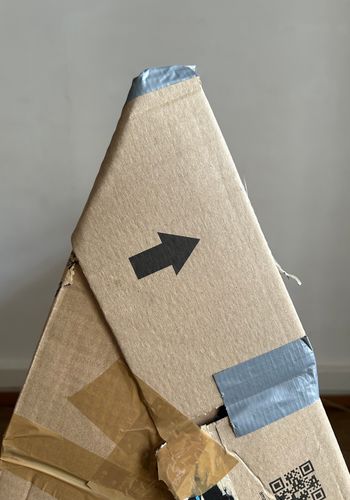

A project made in the course
The Media Bedroom
The Media Bedroom is a bachelor-level course in Interior & Exhibit Design that introduces students to the fundamental principles of exhibition design through the critical investigation of the bedroom as a post-domestic space. Drawing on Paul B. Preciado’s notion of post-domesticity, the course approaches the bed not as an intimate, isolated object, but as a media-saturated device—an infrastructural node where bodies, images, data, labor, and desire converge. Once understood as the ultimate site of privacy, the bedroom today is continuously perforated by communication technologies that transform it into a stage, a studio, a workplace, and a broadcast interface.
More projects by Alba Lucia Aviles Semjevski, Denise Pichler, Irene Besana

Denise Pichler
Do you like it sweet or spicy?
Alba Lucia Aviles Semjevski
What if we reinvented the past?

Berrit Nadja Schindler, Caroline Angelika Pauline Blueml, Clara Isabel Peulecke, Dario Vedova, Delia Bianchi, Denise Pichler, Gioele Maines, Giulia Alessandroni, Irene Besana, Lena Victoria Keller, Lucia Stallone, Maddalena Sartori, Magdalena Theresa Leipold, Orsolya Karola Ujlaki, Stella Winona Brandlhuber, Teresa Ronchin, Theo Kortschak
What's the shape of wine?

Berrit Nadja Schindler, Caroline Angelika Pauline Blueml, Clara Isabel Peulecke, Dario Vedova, Delia Bianchi, Denise Pichler, Gioele Maines, Giulia Alessandroni, Irene Besana, Lena Victoria Keller, Lucia Stallone, Maddalena Sartori, Magdalena Theresa Leipold, Orsolya Karola Ujlaki, Stella Winona Brandlhuber, Teresa Ronchin, Theo Kortschak
Can we be together?
Berrit Nadja Schindler, Caroline Angelika Pauline Blueml, Clara Isabel Peulecke, Dario Vedova, Delia Bianchi, Denise Pichler, Gioele Maines, Giulia Alessandroni, Irene Besana, Lena Victoria Keller, Lucia Stallone, Maddalena Sartori, Magdalena Theresa Leipold, Orsolya Karola Ujlaki, Stella Winona Brandlhuber, Teresa Ronchin, Theo Kortschak
What can counting rice teach us?
Irene Besana, Maddalena Sartori
How many hidden figures can you spot?
Explore related projects

Elena Maria Sezzano
What's inside the Berghain?

Isabella Emi Nakamizu Wiesen, Nikolaos Mavropoulos
If you can't go to the club, let the club come to you!

Lorenzo Del Forno, Nina Novalic
How are independent collectives in Friuli Venezia Giulia reinventing nightlife?

Argentina Carrino, Caterina Tonini
Può un bagno pubblico essere anche una discoteca?

Alice Speranza, Matteo Zanettin
Have you ever walked a runway?

Catharina Kolk
How can the experience of Berghain be translated into a exhibition object?